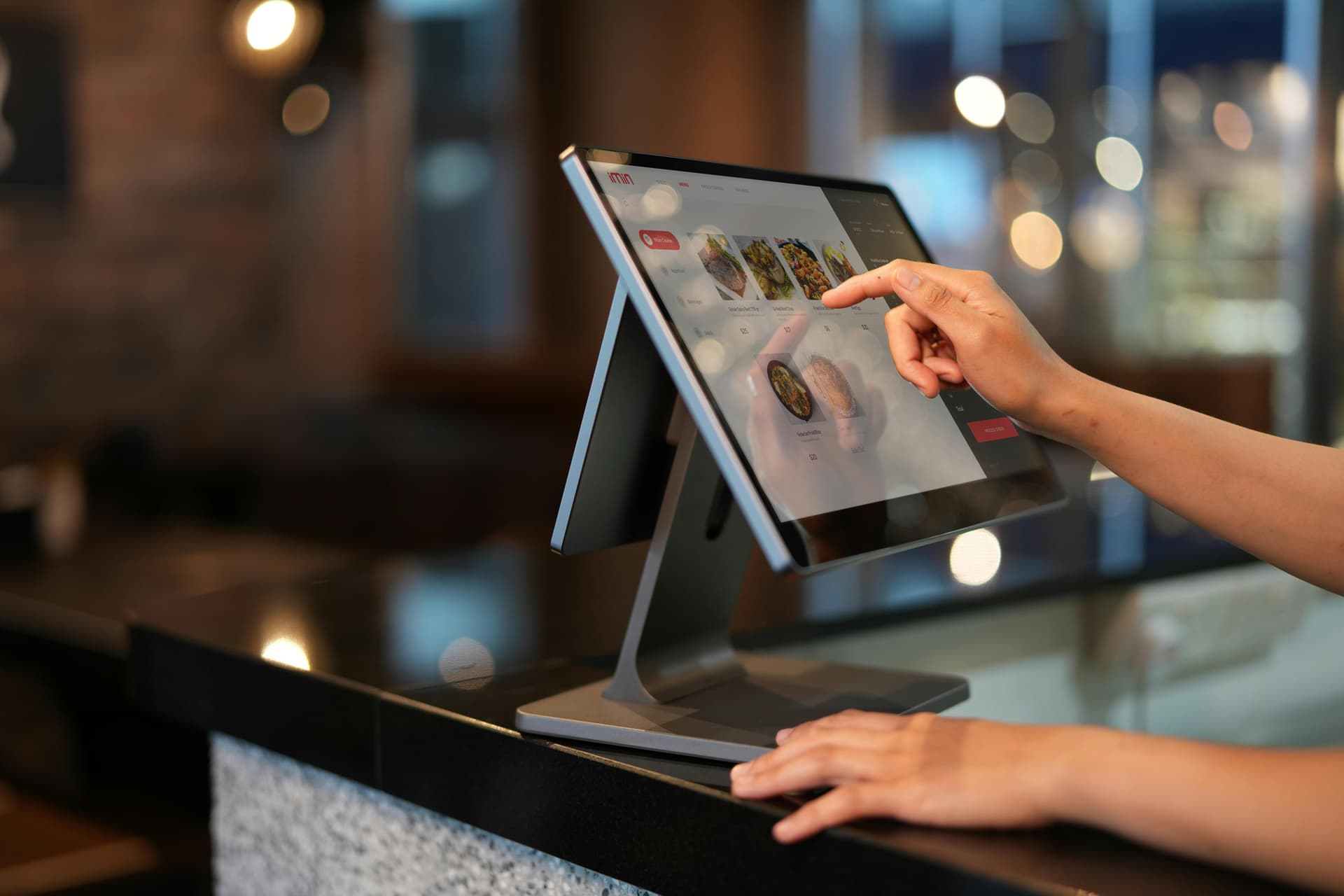

POS Software for Restaurant: The Complete Point of Sale Guide for 2026
Shopping for POS software for your restaurant? This complete 2026 guide breaks down what modern restaurant point of sale systems must do, what they cost, and what to demand before you sign.
POS Software for Restaurant: The Complete Point of Sale Guide for 2026
Your restaurant's point of sale system is not a cash register. It hasn't been for years. In 2026, the right POS software for a restaurant is the central nervous system of your entire operation — connecting front-of-house to back-of-house, in-person dining to digital ordering, payroll to inventory, and analytics to every decision you make across every shift.
Yet the majority of operators are either running systems that can't do half of this, or paying far more than they should for systems that barely do any of it well.
According to Hospitality Technology's 2026 POS Software Trends Study, nearly half of restaurant operators plan to replace or significantly upgrade their POS system this year. The reasons are consistent across every segment: legacy systems are too slow, too fragile, too expensive, and completely disconnected from the operational realities of running a modern restaurant.
This guide is for the operator who is done guessing. Whether you are evaluating your first system or finally ready to walk away from the one that is holding you back, what follows is everything you need to know about POS software for restaurants in 2026 — what it should do, what it actually costs, what the hidden traps are, and what to demand before you sign anything.
HubPlate was built specifically to solve the problems this guide addresses — flat-rate pricing, zero transaction fees, full AI-powered functionality, and 100% offline resilience. But this guide will give you value regardless of which direction you go.
What a Modern Restaurant Point of Sale Actually Is
The definition of a restaurant point of sale has changed dramatically over the last decade, and even more sharply in the last two years. According to the National Restaurant Association's 2025 Industry Report, 73% of restaurants have now adopted digital POS systems, up from just 54% in 2020. That adoption rate tells you something important: operators who were on the fence have made their move. The ones still running legacy systems are now the exception, not the norm — and they are feeling it.
So what does a true modern restaurant POS system actually do in 2026? The short answer: everything.
A modern restaurant point of sale is a unified operational platform that manages every touchpoint of your business from a single connected system.
That includes:
- Order management — taking, modifying, and routing orders across the dining room, kitchen, and every digital channel simultaneously
- Payment processing — EMV, contactless, mobile wallets, tableside pay, split checks, and gift cards all in one flow
- Kitchen Display System (KDS) integration — millisecond sync between front-of-house orders and kitchen stations, eliminating ticket errors and bottlenecks
- Real-time inventory tracking — stock levels that update automatically with every sale, with low-par alerts and auto purchase order generation
- Labor and scheduling — clock-ins, shift management, tip pooling, and payroll export in one ecosystem
- CRM and loyalty — guest profiles, order history, personalized promotions, and retention programs tied directly to every transaction
Analytics and reporting — real-time sales data, labor cost percentages, food cost variance, and performance trends available at any moment from any device - Online ordering integration — first-party digital orders, third-party delivery management, and upsell prompts all flowing through the same system
According to research published by Verified Market Research, the global restaurant POS software market is currently valued at approximately $18.96 billion in 2026 and is growing at 9% annually. Cloud-based deployments now account for over 56% of the market, driven by the undeniable advantages of remote access, lower upfront costs, automatic updates, and platform-wide integrations.
The message is clear: operators who are still running fragmented, on-premise systems are competing at a structural disadvantage. The gap between those who have modernized and those who haven't is widening every quarter.
Why Operators Are Switching — And Why So Many Stay Stuck
According to a study cited by Restaurant Dive, 37% of operators who know their current POS system isn't cutting it avoid switching anyway — simply because the process feels overwhelming. That is a significant number of restaurant owners suffering through a broken tool every single day because the alternative feels like too much work in the short term.
Here is what actually drives operators to finally make the move, according to Lavu's 2026 POS Buyer's Guide for multi-unit operators:
1. Payment lock-in — The processor is baked into the contract, removing any ability to negotiate rates regardless of volume. Operators on proprietary processing arrangements often pay 2.5–3.5% per transaction with no leverage to reduce it as their sales grow.
2. Post-sale support decline — The sales experience is polished. The support experience after onboarding is frequently the opposite. Systems go down on Friday nights and the response time stretches into the next day.
3. Add-on pricing that makes the true cost unrecognizable — The base subscription looks reasonable. Then online ordering is an add-on. Loyalty is an add-on. Inventory management is an add-on. Reporting is an add-on. According to UpMenu's analysis of leading POS pricing structures, most small operators end up paying $300–$700 per month in reality, with full-service locations commonly exceeding $1,000 per month once processing fees and activated modules are included.
4. AI that only reads one data source — A POS system that delivers AI-powered insights from transaction data alone is only showing operators a fraction of the operational picture. Labor costs, scheduling efficiency, and inventory variance require data from multiple systems working together — and most legacy platforms cannot deliver that.
Understanding why operators switch is only half the equation. The more useful question is: what should you be demanding from a restaurant POS system before you commit to one?
The 8 Non-Negotiables for Restaurant POS Software in 2026
This is the framework every operator should apply when evaluating any POS software for their restaurant. These are not nice-to-haves. In 2026, they are the baseline.
1. 100% Offline Resilience
Your internet connection going down should never mean your restaurant stops taking orders. Full stop.
According to research published by the IFBTA, offline uninterruptable operations is now one of the top four features operators demand in a new POS system. A cloud-based restaurant POS that cannot function during an internet outage is not a cloud POS — it is a liability. Every serious platform in 2026 should process transactions locally during outages and sync automatically when connectivity is restored. If the vendor cannot confirm this capability unambiguously, move on.
2. True Flat-Rate Pricing With Zero Hidden Fees
The sticker price on a POS system subscription almost never reflects what operators actually pay. Payment processing fees at 2.5–3.5% per transaction, PCI compliance charges, per-terminal licensing fees, early termination penalties, and add-on module costs can silently double or triple a monthly bill within the first year.
According to UpMenu's detailed breakdown of leading POS pricing, the typical restaurant profit margin runs just 2–6%, which means even small differences in processing fees or subscription costs have a direct and outsized impact on the bottom line. Before signing anything, request a full total cost of ownership projection — software, hardware, processing, add-ons, and support — for a 36-month period. That is the number that matters.
3. BYOD — Bring Your Own Device
Hardware lock-in is one of the most expensive traps in the restaurant technology market. Proprietary terminals costing $500 to $2,000 per device — that you cannot use with any other system — create a compounding hardware tax that follows operators for the life of the contract.
According to Lightspeed's POS cost analysis, a complete legacy hardware setup for a single register can run $500 to $3,000 upfront, with leased hardware over a 48-month term sometimes costing two to three times the outright purchase price. Cloud-native POS platforms that run on iPads, Android tablets, or any BYOD-compatible device eliminate this cost entirely and give operators the freedom to use what they already own. That freedom is worth thousands of dollars annually.
4. AI-Powered Intelligence Across the Full Operation
A restaurant POS system in 2026 should not just report what happened. It should help you understand why it happened and what to do next.
According to Incentivio's 2026 restaurant technology analysis, operators who have deployed AI-integrated platforms are reporting 60% improved operational efficiency, 52% better customer retention, and 30% higher check averages from mobile ordering alone. Those numbers are not speculative projections — they are outcomes from operators who made the investment.
Practically, AI in a restaurant POS system should deliver: automated upsell prompts during tableside and digital ordering, demand forecasting that optimizes inventory ordering and staffing levels, recipe costing intelligence that flags high-margin items in real time, and guest recognition that allows personalized service at scale. We covered the full upside of AI-powered upselling in our Restaurant Upselling Strategies blog — the revenue lift from automated prompts alone is significant enough to justify a technology investment on its own.
5. Real-Time Analytics From Any Device
According to Eat App's restaurant industry trends research, 42% of operators are still relying on pen-and-paper or spreadsheets for scheduling, inventory, or sales tracking. In an operating environment where food costs, labor costs, and guest behavior are shifting constantly, that manual approach is costing real money in blind spots and delayed decisions.
A modern cloud-based restaurant point of sale should give every operator — whether they are on the floor or off-site — live access to sales data, labor cost percentages, top-selling items, food cost variance, and table turn rates from any internet-connected device. Real-time visibility is not a premium feature in 2026. It is table stakes.
We covered the full strategic value of restaurant analytics in our Restaurant Analytics: Real-Time Data blog.
6. Integrated Kitchen Display System (KDS)
The kitchen display system is where your POS software lives or dies in service.
An integrated KDS eliminates paper tickets, reduces miscommunication between FOH and BOH, and gives the kitchen real-time visibility into order priority, timing, and station routing. Every order modification, special request, and course pacing decision should flow from the POS directly to the relevant kitchen station with no manual intervention.
According to Toast's industry research, the top features operators prioritize in a POS upgrade include ease of use, depth of reporting, and inventory reporting — all of which are directly enabled by a well-integrated KDS that captures clean, real-time operational data from every ticket.
7. Multi-Channel Order Management — In One Dashboard
By 2026, most restaurants are taking orders from multiple channels simultaneously: dine-in tables, bar service, online ordering, third-party delivery platforms, and phone orders. A POS system that treats each of these as a separate flow — requiring staff to manage multiple tablets, manually re-enter orders, or reconcile separate systems at end of day — is creating the exact kind of operational chaos that erodes both margin and sanity.
According to QSR Magazine's reporting on Yum! Brands' Byte platform, the industry's most forward-thinking operators are betting everything on unified platforms that eliminate point-to-point integration between disconnected vendors. The lesson for independent operators and multi-unit groups alike is the same: fragmentation has a cost.
Every workaround your team invents to bridge two systems that don't talk to each other is labor, time, and margin leaving through a gap you could close.
8. Scalability Without a Platform Change
The POS system you choose today should be the same one running your second, fifth, and tenth location — with the same dashboard, the same data visibility, and the same operational logic applied across every site from a central command.
According to modern restaurant technology guidance from Secure Hospitality Solutions, cloud-based POS platforms allow operators to push menu updates, pricing changes, and promotional content across all locations instantly from a single interface. For a multi-unit operator, that capability alone eliminates hours of manual work per location per week. For a single-location operator planning to grow, choosing a platform that cannot scale is choosing to pay for a migration later. Choose once, build on it.
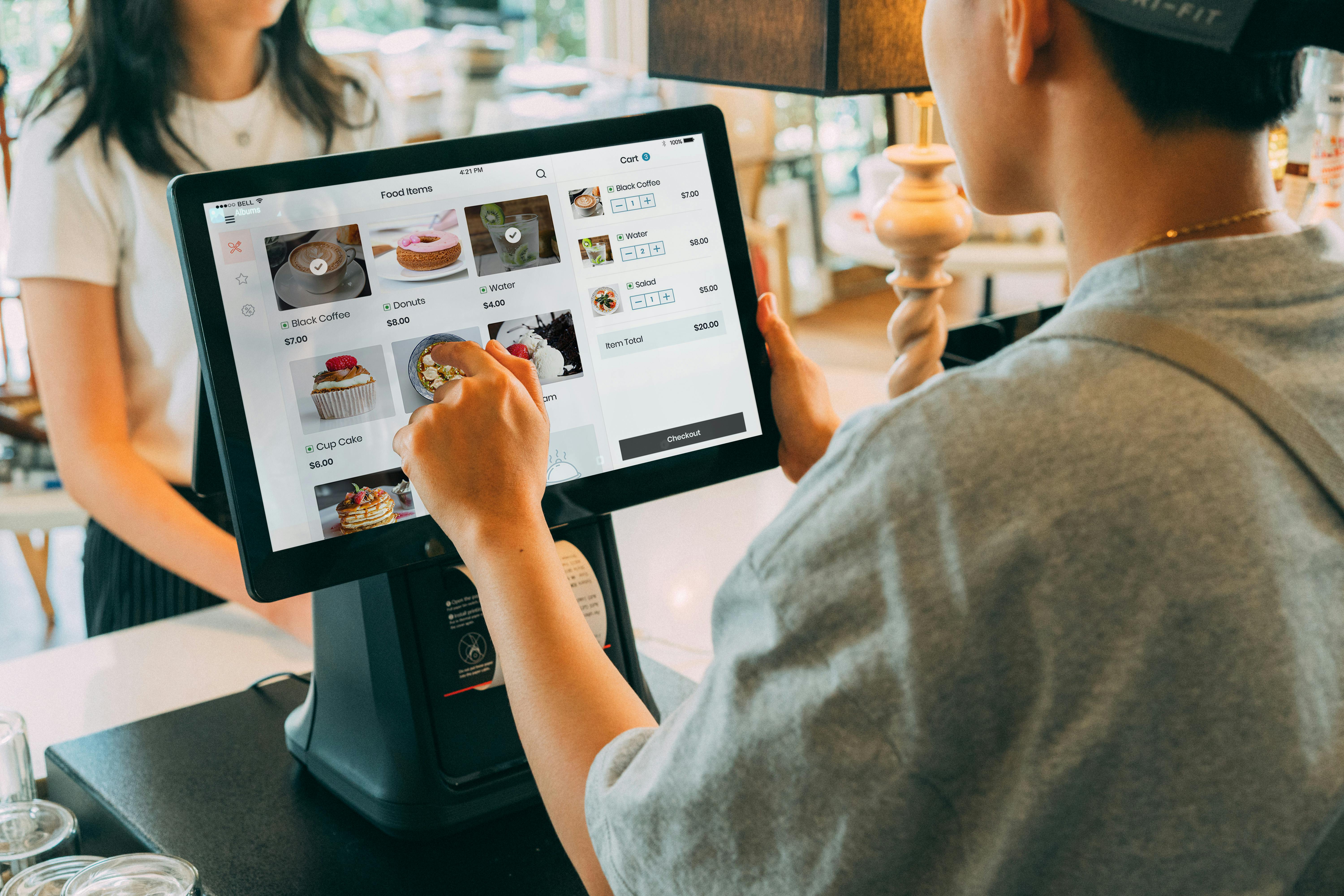
What Restaurant POS Software Actually Costs in 2026
This is the section most vendors prefer you skip. Here is an honest breakdown.
Software Subscription: $60 to $300+ per month depending on tier and features. Entry-level plans cover basic transaction processing. Mid-tier adds table management, reporting, and some integrations. Premium tiers include full analytics, loyalty, online ordering, and advanced inventory tools. Watch for per-terminal fees — some platforms charge $30 to $50 per device per month on top of the base subscription.
Hardware: $500 to $3,000+ for a basic single-station setup. Full restaurant configurations with multiple terminals, kitchen displays, and handheld devices can run $5,000 to $15,000 upfront. Platforms that support BYOD eliminate this cost entirely for operators who already own compatible devices.
Payment Processing: The most significant ongoing cost and the most frequently obscured. Standard flat-rate processing runs 2.6% + $0.10 per transaction. Interchange-plus pricing is more transparent and often cheaper for high-volume operators. According to Lightspeed's payment processing analysis, processing fees at 1.5% to 3.5% per transaction add up fast — for a restaurant doing $1 million in annual card sales, the difference between 2.0% and 3.0% processing is $10,000 per year.
Add-Ons: According to Otter's POS pricing breakdown, common add-on costs include online ordering at $30 to $100 per month, loyalty programs at $25 to $75 per month, delivery integration at $50 to $100 per month, kiosk licenses at $50 to $150 per month, and gift card programs at $10 to $50 per month. Stack three or four of these on a mid-tier base plan and a restaurant that budgeted $150 per month is paying $400 to $600 before processing.
The Three-Year Test: Always calculate total cost of ownership over 36 months — software, hardware, processing, add-ons, and estimated support costs. That number, divided by 36, is what your POS system actually costs per month. Evaluate every vendor against that single figure.
The Questions Every Operator Should Ask Before Signing
Before committing to any POS software for your restaurant, get written answers to these questions:
- What is the total monthly cost including all features I will actually use, all hardware, and payment processing at my current sales volume?
- What happens if my internet goes down mid-service? Walk me through the offline mode in detail.
- Do I own my customer data, and can I export it in a usable format if I leave?
- What is the early termination fee and contract length?
- Are there per-terminal licensing fees beyond the base subscription?
- What is the processing rate structure — flat rate, interchange-plus, or tiered?
- Can I use my own processor?
- Is there a BYOD option, or am I required to purchase your proprietary hardware?
- What does AI-powered functionality actually do in your system — and what data sources does it connect?
- What is your average response time for critical support issues during peak service hours?
Any vendor who cannot answer these questions clearly and in writing is telling you something important about what the experience will look like after you sign.
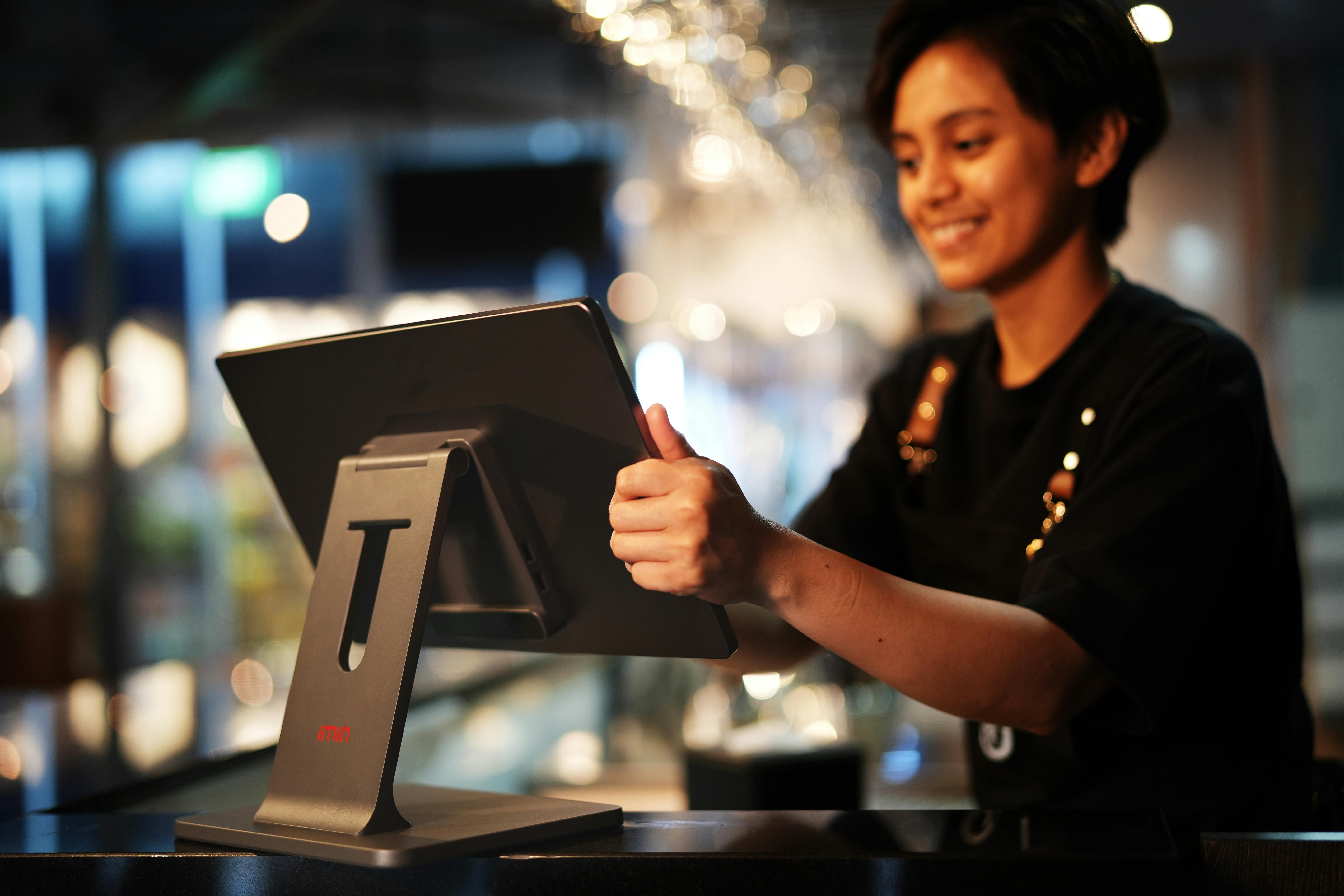
What the Right POS Software Changes for Your Restaurant
When an operator moves from a fragmented or legacy system to a true unified cloud POS, the operational change is immediate and measurable. Ticket times drop. Order accuracy improves. End-of-night reconciliation that used to take an hour takes minutes. Labor scheduling that required spreadsheets and guesswork becomes data-driven and optimized. Food cost variance that was invisible becomes visible — and fixable.
According to research published by Eat App, 95% of restaurateurs agree that restaurant technology improves their business efficiency — and 73% of diners say restaurant technology improves their guest experience. The operator who invests in the right system is not just solving internal problems. They are delivering a better experience to every guest on every visit.
We covered the full cost and opportunity of this transition in our True Cost of Restaurant POS Systems blog — including exactly how legacy system costs compound over time and how to calculate whether a switch makes financial sense for your specific operation.
Ready to Replace the System That's Holding You Back?
HubPlate was engineered to be everything a modern restaurant point of sale should be — and nothing that drives up your costs unnecessarily.
Here is what operators get on the HubPlate platform:
Revenue Engine: Tableside mobile POS with automated AI-powered upsell prompts, Stripe-integrated payments, and commission-free gift cards — all in one flow.
Kitchen Heart: Multi-station KDS with millisecond order syncing, bottleneck heatmaps, and full ticket tracking from the moment an order is placed to the moment it hits the pass.
Operations Brain: Real-time visual seating maps, dynamic waitlist and reservation management, and fair server assignment built directly into the POS interface.
Human Capital: AI-rule-based scheduling, mobile clock-ins, and one-click payroll exports — all connected to the same data ecosystem as your sales and labor reporting.
Logistics Hub: Precision recipe costing, auto-generated purchase orders, inventory par-level tracking, and white-labeled online ordering with Uber Direct integration — zero commissions, zero middlemen.
Analytics: Real-time sales data, labor cost percentages, food cost variance, and full business performance reporting accessible from any device, at any moment.
AI Intelligence: Google Gemini AI powers menu suggestions, upsell prompts, and operational insights that get smarter with every shift your team works.
100% Offline Resilience: Your service never stops, regardless of what your internet connection does.
BYOD Freedom: Run the entire platform on the devices you already own. No proprietary hardware. No hardware tax.
And all of it runs on one flat rate: $99 per month, per location. Zero transaction fees. Zero commissions. No hidden add-ons. No long-term lock-in.
That is not a promotional rate. That is the price.
Book your demo at HubPlate.app →
ENJOYED THIS PIECE?
Share it with your network and help them scale too.